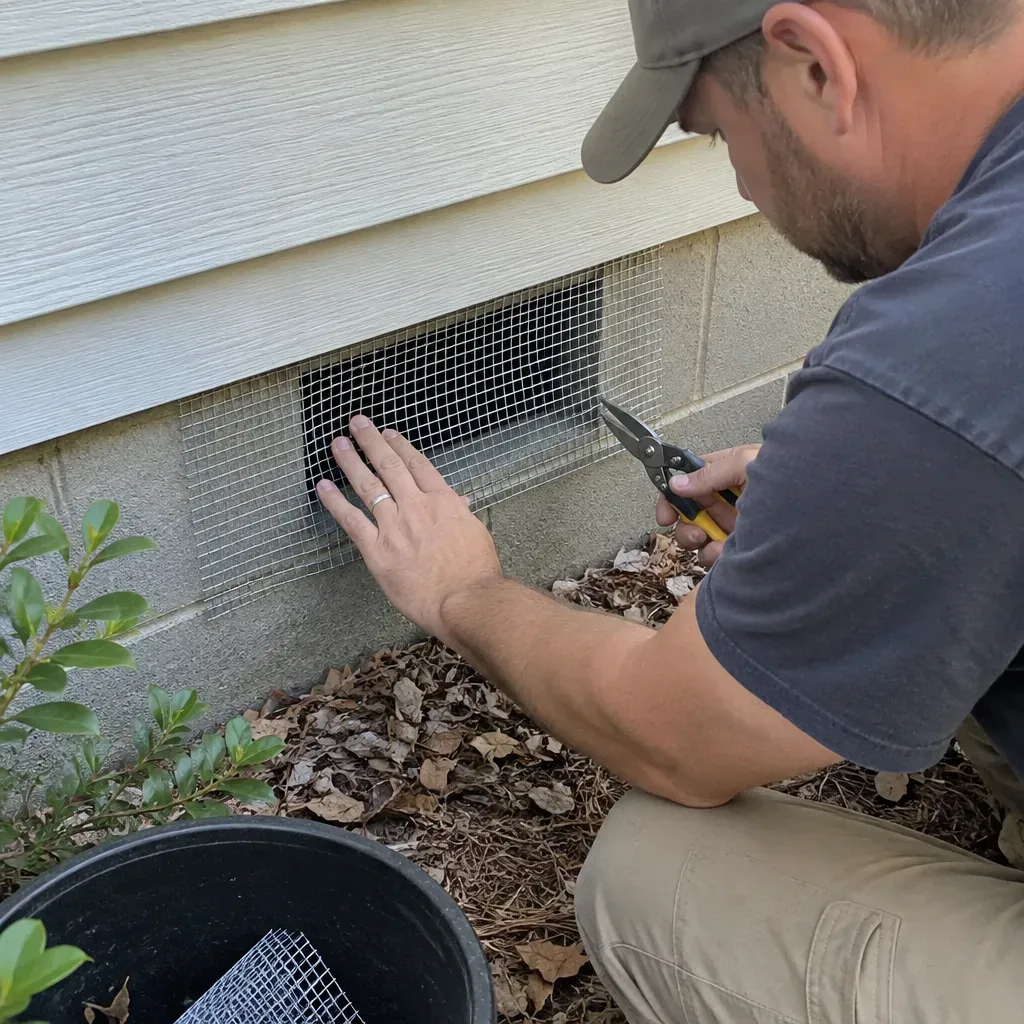
Hardware Cloth for Waterbury Rodent Exclusion
See where rodent mesh can cover openings, what affects material and fitting costs, and how to check the finished edges.
In Waterbury, rodent-exclusion cost depends partly on opening size and access. Hardware cloth is wire mesh that can cover larger openings and vents, helping keep rats and mice out. Measure each opening and check that a cover can attach while preserving airflow and access.
What Affects Covering Costs
Cost depends on the opening’s size, the mesh selected, and the work needed to secure it. Hardware cloth is a stiff wire mesh used to cover larger openings that rats or mice could pass through. In Waterbury, a homeowner can start by measuring the opening and noting whether air must pass through. A cover should block rodent access while keeping ventilation or needed access clear. The pros we connect you with can explain how those details affect an estimate.
Large gaps in a foundation vent or an unused opening around a utility area may suit a mesh cover. Rats and mice can enter through openings, so the cover must span the full opening. A homeowner should check the edges as well as the center. A loose edge can leave a route inside. For a Waterbury property, the opening’s shape and access for installation help determine how much material and labor the work may take.
A small commercial property may have several larger vents or service openings to screen. Each opening adds measuring, cutting, and fastening work, so the estimate can change with the number and layout of covers. A shop owner can list openings and note which ones need airflow or routine access. Near the Naugatuck River, the same practical questions apply: where does the cover fit, and can it stay secure without interrupting the opening’s function?
Openings That Suit Mesh Covers
Mesh size affects both material choice and how well a cover blocks access. For hardware cloth for mice, openings in the mesh need to be small enough to prevent passage. The wire also needs enough strength for the location and expected wear. A homeowner in Waterbury can compare options by asking what mesh opening and wire thickness the estimate includes. A heavier or finer mesh may change material cost, while the opening’s dimensions determine how much is needed.
Material finish matters where moisture or contact could wear the wire. Galvanized hardware cloth is commonly chosen for durability, but the right material depends on the site. A property owner should ask whether the estimate includes suitable fasteners and whether the mesh can be cut cleanly to fit. For a Waterbury home, the price comparison is clearer when each proposal names the mesh type, dimensions, and attachment materials rather than giving one unexplained total.
A small business may need mesh over an opening that must remain clear for airflow. The cover should be measured to fit that opening without narrowing it or obstructing equipment access. A rodent mesh panel can be shaped for the opening, but unusual dimensions may take more fitting work. Owners near Naugatuck Green can ask whether the estimate accounts for trimming and a finished edge. Those details affect labor and help show what the quoted work includes.
Mesh Choice and Firm Edges
Attachment affects the cost because a cover must hold along its edges. Fasteners need a sound surface, and the panel should not leave a passable gap around its perimeter. A Waterbury homeowner can ask how the mesh will be held in place and whether the surface needs preparation. A broad, accessible opening may take less fitting than a cover with many corners or obstructions. The estimate should reflect the actual shape and mounting points.
Access can add labor when an opening is awkward to reach or has equipment nearby. A cover must still allow the owner to reach parts that need inspection or service. Before comparing estimates, mark which panels may need to open or come off later. A property near Linden Park can use that list to compare the attachment method and access provisions. The lowest material cost may not cover the fitting needed for a usable panel.
Keeping Covers In Working Order
Inspection after installation helps catch loose fasteners, bent wire, corrosion, or new edge gaps. These problems can reduce the cover’s usefulness even when the mesh itself remains intact. In Waterbury, an owner can ask whether later checks are included in the estimate or billed separately. A simple visual check can note damage or movement. Any repair cost depends on what has loosened or worn and whether the panel can be refastened.
A cover should preserve the opening’s purpose as well as block access. Leaves or debris can collect against mesh, and a panel can bend if something presses on it. A homeowner should keep the face clear and check that ventilation still works. For a Waterbury property, ask what signs mean the cover needs repair, and whether replacement mesh or fasteners are included. Those terms make future upkeep easier to compare before choosing an installation.
Check These Details Before Fitting
- Measure each opening, including its corners and edges, before estimating mesh and fitting work.
- Compare mesh opening, wire strength, material finish, and fasteners in each estimate.
- Check that the finished cover stays secure while preserving ventilation and needed access.
- Measure the opening and note its shape; wider or uneven spans need more mesh and cutting, which can raise material and fitting costs.
- Choose mesh that blocks rodent access while allowing needed airflow; tighter mesh and corrosion-resistant material can affect the cover’s cost.
- Check how the edges will fasten and stay reachable for inspection; extra framing, awkward access, or a loose edge can add work.
Rodent Control Basics
Where can hardware cloth cover openings around a Waterbury property?
Hardware cloth can cover larger openings such as foundation vents or unused service openings, where a mesh panel can span the gap. It should fit the full opening and attach securely around its edges. In Waterbury, measure the opening and identify any airflow or access needs before comparing estimates. A cover should keep rodents out without blocking ventilation or routine access.
What mesh works for keeping mice out without blocking airflow?
The estimate can change with the opening’s dimensions, mesh size and strength, material finish, and attachment work. Awkward access or a shape that needs extra cutting can add labor. Ask for the mesh type, measurements, fasteners, and fitting work to be listed. That makes estimates for a Waterbury home easier to compare by the work each one includes.
What affects the cost of fitting hardware cloth over an opening?
Cost depends on opening size, mesh material, and how the cover attaches. A Waterbury homeowner may pay more for uneven framing or tight access. Large vents need more rodent mesh, fitted to preserve airflow. At a small shop, hardware cloth for mice may need supports across broad openings. Labor depends on cutting, fastening, and closing edge gaps without blocking access. Inspection may reveal damaged framing or a cover needing replacement.
Measure the Opening Before Choosing
Measure the opening and note airflow or access needs before comparing hardware cloth materials and fitting estimates in Waterbury.
Call (203) 884-8369