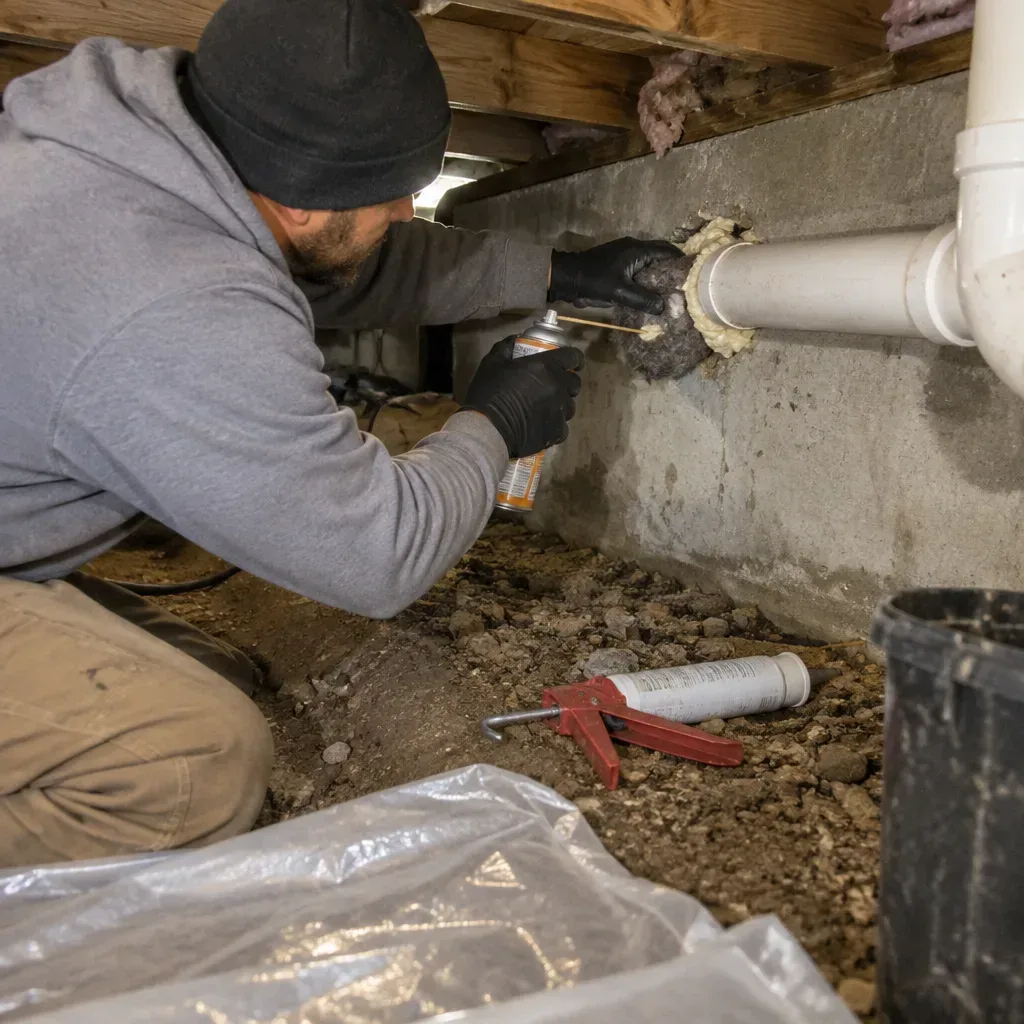
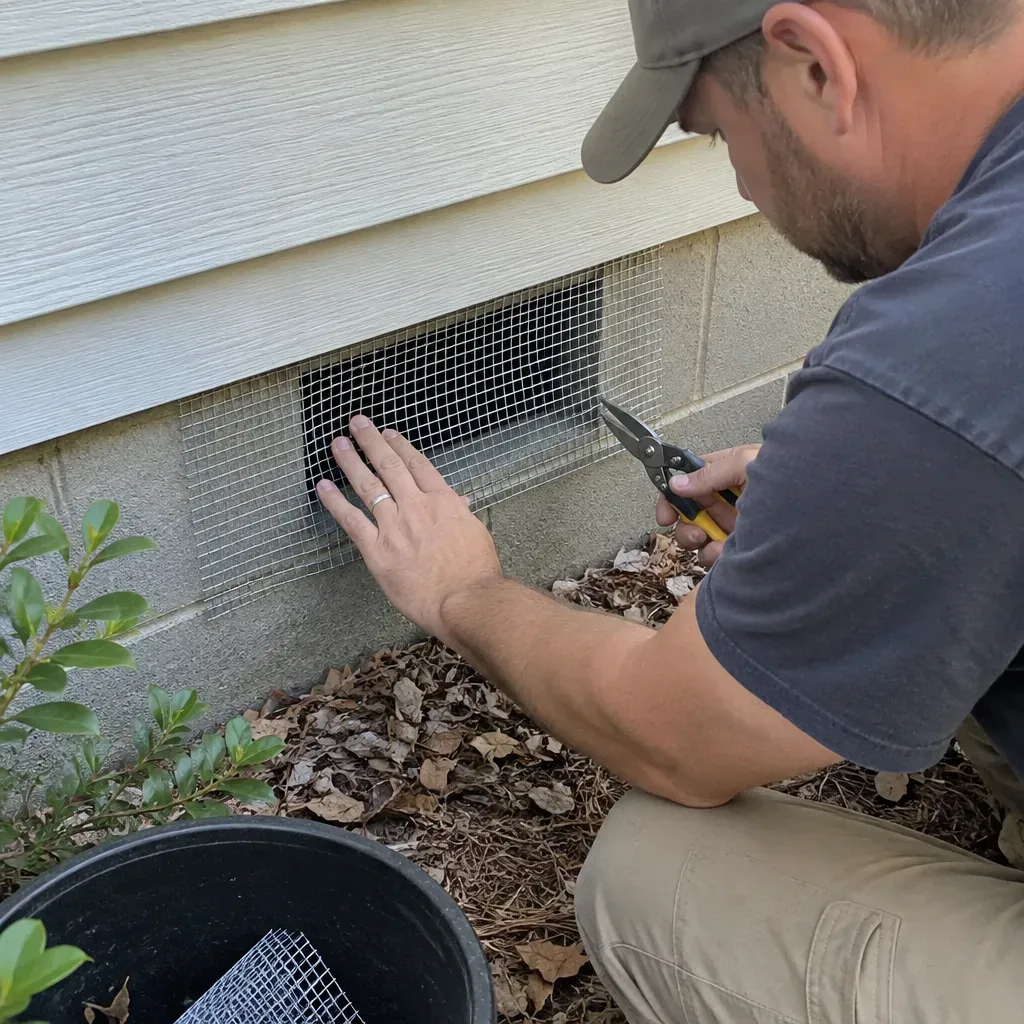
Entry Points Explained
Rodent Entry Points Explained for Waterbury, CT
Which signs can help locate rat or mouse activity, where might rodents enter, and what could sealing those openings involve?
PROPERTY FACTORS
Rodents may leave droppings, gnaw marks, nesting material, or sounds inside a home. Activity in one room can lead back to an opening elsewhere. Note where signs appear, avoid stirring up dust around droppings, and request inspection and treatment guidance that considers children, pets, or business needs.
The pages that follow explain inspection, rodent signs and access, control and prevention choices, and service cost estimates in Waterbury. Rodent service estimate bands are listed in the pricing guide.
Treatment Steps
Rodent Control Service Steps
Rodent Q&A
Rodent Control Basics
What do traps do during a rodent control visit?
Traps capture rodents at selected points, helping address activity found during an inspection. A captured rodent can help confirm which part of the property is seeing activity. The pros we connect you with can explain where a trap fits the service plan and how checks are handled. A trap addresses activity, while open gaps may need separate exclusion work.
When might a provider use a bait station?
Bait stations hold rodent bait for targeted use where inspection findings support that approach. Their selection and placement depend on the site, including nearby children, pets, and other conditions. At a home or small business near Town Green, the owner can ask the provider how stations will be monitored and what precautions apply. Monitoring can show whether rodents are interacting with the bait station.
How do monitoring devices help track rodent activity?
Monitoring devices help show whether rodent activity continues and where follow-up attention may be needed. They support assessment; they do not seal entry points or necessarily control activity by themselves. In a Waterbury home or small commercial property, the service plan should explain what gets checked and when. Follow-up timing and availability vary by provider, and findings may lead to changes in device choice or placement.
What do exclusion materials do after devices are placed?
Exclusion materials close gaps that rodents could use to enter, including openings around pipes, doors, or foundations. They reduce access but do not capture rodents already inside. An inspection helps identify which openings matter at a particular property and what materials fit the site. In Waterbury, the owner can ask how sealing would work alongside traps or bait stations; the right combination depends on the findings.
Rodent Help
Not sure where rodents are getting in?
Describe the rodent signs when calling. Ask the pros we connect you with about inspection charges, availability, scheduling, visit costs, written scope, and warranty terms.
Call (203) 884-8369