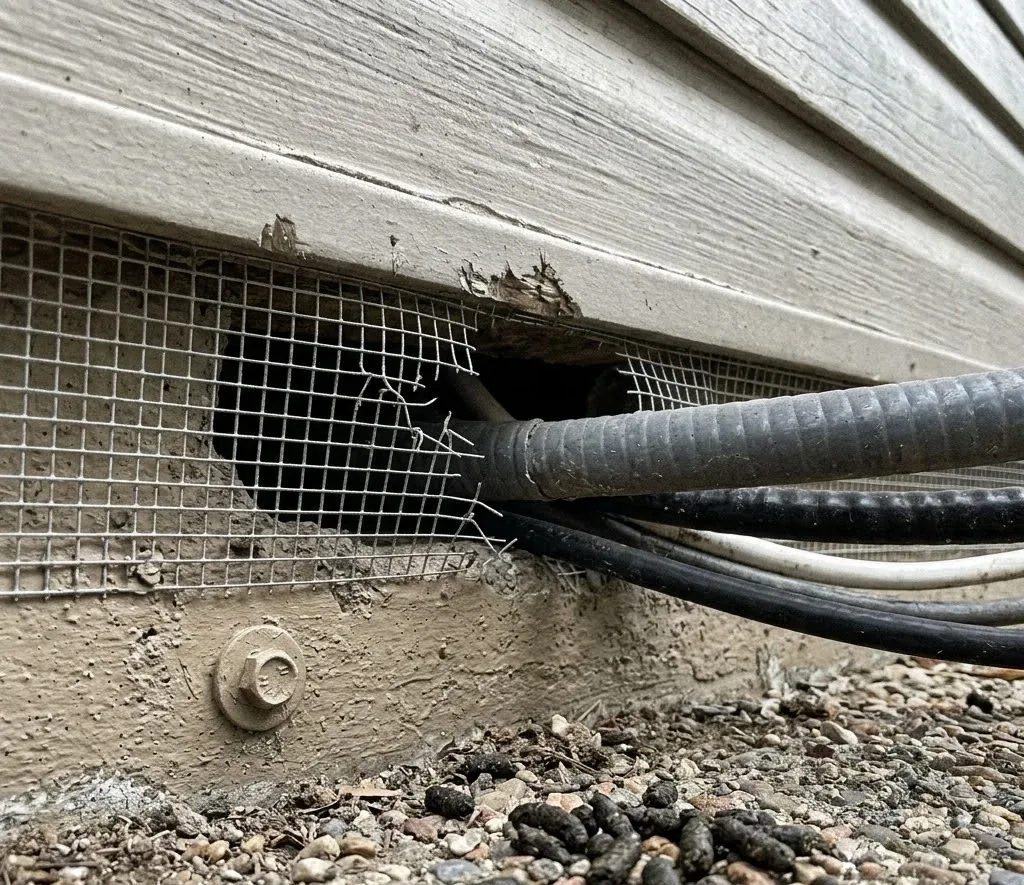
Using Copper Mesh for Rodent Gaps in Waterbury
Copper mesh can fill small uneven gaps, but exposure and the finished surface affect whether it suits the opening.
Copper mesh is packed into small, irregular rodent gaps where it can fit tightly and stay supported. It is a filler, not a finished seal. Gap size, edge condition, moisture, and contact with nearby materials help determine whether mesh or another repair is suitable.
Where Copper Mesh Fits
Rodent gap filler costs vary with access, gap size, and the finish needed. Copper mesh is a compressible metal weave for packing into small, uneven openings. In Waterbury, a homeowner might consider it where a narrow crack has an irregular shape and a firm backing. The mesh bends to fit, while its interwoven strands resist easy gnawing. It is not a finished seal by itself. The opening still needs a suitable outer covering when the mesh must stay in place or meet a finished surface.
The mesh works by filling the open space and making a gap harder to pass through. In a Waterbury home, a small rough-edged opening may accept a compact plug more readily than a rigid piece cut to shape. The strands can be pressed into the uneven edges, but the fit matters. A loose bundle can shift or leave a route around it. The useful question is whether the material can be held securely without being exposed to contact or conditions it cannot tolerate.
Copper mesh for mice is considered for narrow, irregular gaps where a flexible filler can be packed firmly. A Waterbury shop may have different surfaces and access than a house, so the same material choice does not suit every opening. Mesh leaves a textured face and visible weave. It does not create a smooth, weather-tight finish on its own. Where appearance or a continuous surface matters, the repair may need a finishing layer compatible with the opening and surrounding materials.
How Mesh Fills Uneven Gaps
Mesh is an insert, not a complete repair. In Waterbury, an installer should consider what will hold it in place and whether the outer finish can bond or sit properly. A soft or crumbling edge may not retain packed strands. Movement in the surrounding material can loosen the fill over time. A neat-looking surface can also hide an incomplete fit if the mesh stops short of the full opening. The finished repair should close the route without relying on a thin face layer alone.
Exposure changes how copper mesh performs. For a Waterbury property, a damp or weather-exposed location calls for attention to moisture and the materials touching the copper. Metals and finishes can react differently when they remain wet or make contact. The local conditions at the gap matter more than the material name alone. If the area stays damp, a professional should explain whether the chosen combination is suitable and how it will be finished for that exposure.
Copper mesh can be shaped by hand, but sharp strands may catch skin or snag nearby material during fitting. At a Waterbury residence, careful trimming and placement help keep loose ends from protruding into a walkway or work area. The opening also needs enough sound material around it to hold the packed mesh. If the edge crumbles or the insert springs back out, adding more loose material may not solve the underlying fit. The repair should match the condition of the surface.
Mesh Is Not The Finished Seal
For a Waterbury homeowner, the useful check is whether the opening is small, irregular, and reachable enough for a compact insert. Measure the gap and note whether its edges are firm, damp, or exposed to weather. A narrow, stable space may take mesh; a broad opening or damaged surface may need a different repair. Near Route 128, a property owner should still judge the actual gap and exposure rather than choose by location alone. Conditions at each opening guide the material choice.
A rigid cover may suit an opening that needs a firm, continuous face or extra physical support. In Waterbury, that can matter when the surrounding surface is weak or the exposed edge would leave packed mesh vulnerable to movement. Mesh can fill the uneven space behind a cover, but it does not replace the cover’s supporting role. The repair should account for attachment, fit, and the surface receiving it. A professional can explain why a rigid part is more suitable for that condition.
Check Exposure And Repair Fit
A small commercial property in Waterbury may need a repair that stays tidy under routine cleaning and contact. Copper mesh can fit a narrow uneven gap, but exposed strands may catch debris or become disturbed during nearby work. Around Watertown High School, a property owner would still need to assess the actual surface, moisture, and use of the area before choosing a filler. The setting does not determine the material; the opening and its exposure do.
The mesh should be checked if it is exposed, shifts, or no longer fills the opening. At a Waterbury home, a visible change can show that the insert or its finish needs attention. A packed fill may settle or loosen when edges move, while a covering layer can crack or pull away. The appropriate repair depends on what gave way. Taft School is another named local reference, but a nearby property’s gap still calls for its own assessment of size, location, and exposure.
Copper Mesh Fit Checks
- Check the gap’s width and shape; copper mesh is intended for compact, irregular spaces that can hold a firm packed fit.
- Note dampness, weather exposure, and nearby materials that may contact the copper before choosing the filler and finish.
- Use a rigid cover or another repair when the opening needs support, a continuous face, or protection from disturbance.
- Use mesh only where it can be packed firmly into a small, uneven opening and held without loose strands sticking out.
- Mesh fills a gap but may not finish its surface; check whether a separate layer is needed to close the opening.
- Check dampness and nearby materials before placement, since exposure and contact can affect which filler or repair is suitable.
Rodent Control Basics
Where can copper mesh help seal rodent gaps?
Copper mesh is suited to small, uneven gaps where the strands can be packed firmly and held in place. In Waterbury, the opening’s size, edge condition, and exposure should guide the choice. Mesh fills space but does not provide a smooth finished surface or sturdy cover by itself. A larger opening, weak edge, or exposed location may need another repair. The fit and final finish determine whether the mesh can serve its intended role.
Does copper mesh create a finished seal on its own?
No. The woven strands can fill an irregular space, but they do not make a smooth or weather-tight surface on their own. A suitable finish or cover may be needed to retain the mesh and close the surface. The right approach depends on the opening’s condition and exposure. If the edge is weak or the gap needs structural support, a rigid repair may be more appropriate than relying on packed mesh.
Does moisture or nearby metal affect copper mesh use?
Moisture and contact with nearby materials matter. Copper can interact differently with other metals or finishes, especially where surfaces remain damp. Before using mesh in an exposed or wet area, consider what surrounds the opening and how the repair will be finished. A professional can explain whether that material combination suits the site. If exposure makes the fit or durability uncertain, another repair may be a better choice.
Check Whether Copper Mesh Fits
Share the gap’s size, location, and exposure with the pros we connect you with to discuss whether copper mesh fits.
Call (203) 884-8369